
An American walnut table is more than just a piece of furniture — it is a symbol of status and refined taste. American walnut wood, botanically known as Juglans nigra, is a premium material highly valued in furniture production, particularly for tables. This species originates from the eastern United States and North America, where the trees can reach 30 to 45 metres in height and up to 1 metre in trunk diameter. Juglans nigra is also known as American black walnut or eastern black walnut. It is a deciduous tree distinguished by the unusual colouring of its wood.
Photos of a Finished American Walnut Table
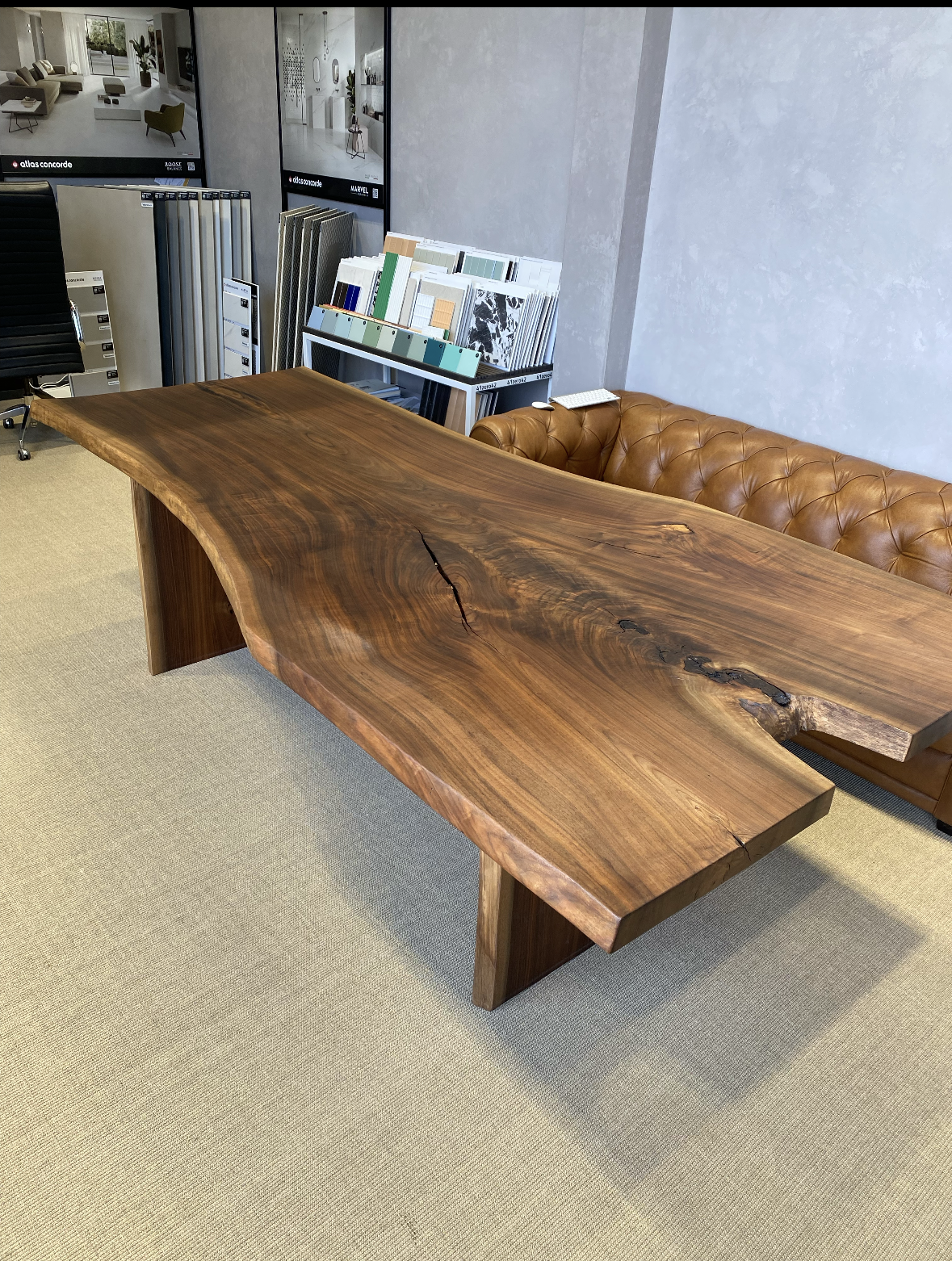


Properties of American Walnut Wood
American walnut wood has unique characteristics that account for its high value and widespread use in furniture production.
Texture and Colour Palette
A cut of American walnut typically reveals straight or slightly irregular grain with occasional curls, often described simply as straight-grained wood. Waves, curls, knots and burls may also occur. The cut surface has a distinctive texture, with a moderate natural or silky lustre. Annual growth rings are clearly visible and create an expressive wood pattern. The texture may range from smooth to slightly coarse.
The colour palette of American walnut consists mainly of brown tones. It ranges from light brown to dark brown and rich chocolate shades. The narrow sapwood, or outer layer, is light in colour and may appear pale yellow or greyish, with honey and light-brown tones predominating. It contrasts with the dark heartwood, or inner layer, which features coffee, chocolate and deep-brown shades. Boards may occasionally contain reddish, purple or grey highlights. Logs with dark or reddish inclusions are also common. Over time, the wood may become slightly lighter. Although American walnut is sensitive to light and prolonged exposure to sunlight can lighten its deep dark colour, fading generally occurs quite slowly because of the characteristic structure of its fibres and grain.
Hardness, Density and Durability
American walnut is classified as a hardwood. Its Janka hardness rating is approximately 1,010 pounds-force, making it harder than teak and mahogany. The wood is considered heavy and dense, with a density of approximately 650 kg/m³. Thanks to its hardness and density, American walnut is a highly durable and strong material. It offers good resistance to deformation, warping and shrinkage. With proper care, American walnut furniture can last for decades and even a lifetime.
Resistance to External Factors
American walnut wood offers good resistance to changes in humidity, making it a suitable choice even for environments with elevated moisture levels. It is not particularly prone to mould, insects or termite damage. Although it can be vulnerable to certain pests, such as yellow-necked caterpillars and webworms, these insects are not common in Ukraine. The wood also has good impact resistance.
It is important to remember that American walnut, like all natural wood, reacts to changes in atmospheric humidity by expanding and contracting. Improper installation or insufficient care can lead to deformation and gaps. In general, however, thicker wooden components tend to be more dimensionally stable.
Advantages and Challenges of Using American Walnut
American walnut offers numerous advantages in furniture making, which is why it is one of the most sought-after materials. At the same time, there are several factors worth considering.
Why Craftsmen and Designers Value American Walnut
American walnut is considered a premium hardwood. It is popular among carpenters in the United States and Europe, as well as among woodworkers in Ukraine. It is prized for its rich chocolate tones and striking dark grain, making it an ideal accent material, for example, for a kitchen island worktop.
Main advantages:
- Aesthetics: its deep colour and expressive grain pattern are among the defining features of this wood. The variety of grain patterns and depth of colour make American walnut one of the most popular materials for premium furniture. It adds sophistication and luxury to virtually any interior.
- Durability and reliability: valuable solid wood is used to create practical, wear-resistant and dependable products. The material is strong and capable of withstanding everyday use.
- Ease of machining: American walnut responds well to mechanical processing, sanding, polishing and finishing with oils or varnishes. It is also suitable for carving and milling.
- Versatility: American walnut works well in both traditional and contemporary interiors. Dark wood can look particularly impressive when styled correctly. Tinting also makes it possible to achieve various shades, including reddish and grey tones.
- Hypoallergenic qualities: because it does not contain the high levels of resin or sap found in some other species, American walnut may be a suitable material for people sensitive to common wood allergens. The natural material itself does not require harmful chemicals or toxic substances.
- Sustainability: many suppliers offer timber grown according to sustainable forestry principles and certified by the Forest Stewardship Council (FSC).
Points to Consider
Despite its many advantages, there are several points to consider when choosing American walnut furniture:
- Cost: American walnut is a premium wood species and is therefore more expensive than many alternatives. It is one of the most luxurious non-exotic timbers available on the market. The cost depends on dimensions, grade and type of processing. Timber prices may be calculated per cubic metre and can vary considerably. Furniture made from solid natural wood is typically the most expensive option.
- Sensitivity to light: American walnut retains its rich colour best indoors. Prolonged exposure to direct sunlight may lighten the dark tone, although fading tends to occur slowly. Using an oil finish with UV inhibitors may help reduce colour fading.
- Maintenance requirements: like all natural wooden furniture, American walnut products require proper care to preserve their appearance and durability. Prolonged contact with liquids, high temperatures, abrasive cleaners and direct sunlight should be avoided. The surface may be susceptible to scratches, so coasters and protective pads are recommended.
Applications of American Walnut in Interior Design
Premium American black walnut is used in a wide range of applications to create refined and distinctive interior elements.
Furniture
Furniture manufacturing is one of the main applications of American walnut. Fine furniture makers choose this species for designer furnishings. Solid boards are used for armrests on chairs and sofas, writing desks and coffee tables, cabinet fronts, bedside tables and chests of drawers. American walnut is also used to create beds, bedside tables, dining tables, chairs, wardrobes, cabinets, sideboards, benches and bar stools.
American walnut fronts are a popular choice for those who value substantial, high-quality furniture. The wood can be milled, carved, painted, tinted and aged. American walnut furniture works well in a variety of interior styles, from classic to modern. Fronts and worktops are used in retro, neoclassical, modern, Baroque, vintage and Art Deco interiors. Black walnut furniture can also look particularly striking in restrained contemporary spaces. To enhance the depth and beauty of the grain, furniture boards are often finished with varnish.
Flooring and Wall Panels
Solid American walnut boards provide a durable and wear-resistant flooring solution. American walnut flooring is regarded as a premium finish for exclusive interiors. The wood is used both as the top layer of engineered parquet boards and as traditional solid-wood floorboards. Tongue-and-groove boards are often used to create an even surface.
American walnut is considered a stable and durable hardwood for flooring applications. Black walnut boards are also widely used as a decorative material for wall panelling. Such finishes are often selected for traditional interiors but can also look impressive in contemporary spaces when styled appropriately.
Wall panels are a classic design solution that can serve both aesthetic and practical purposes, including reducing noise and improving the indoor atmosphere. Dry edged boards can be used to create decorative wall compositions, boiserie, partitions and screens.
Decor and Other Products
American walnut is also used to create various decorative objects, including photo and picture frames, figurines, napkin holders, boxes and stationery organisers. It can also be used for doors, window frames, cornices, staircase handrails and balusters, as well as musical instruments.
American Walnut in Table Making: From Slabs to Works of Art
Table production is one of the most popular applications for American walnut. Its physical and aesthetic properties make it suitable for both traditional and exclusive designer furniture.
Wood Selection and Types of Construction
Selecting the right timber is an important step when creating an American walnut table. The type of wood determines the natural tone as well as the appearance of the final finish. Craftsmen select the best material according to the species, grain pattern and available finishing options.
There are several main types of tabletop construction:
- Edge-grain construction: one of the most common types, made from boards arranged on their edges and glued together so that the narrower edge forms the surface. Strips may be full-length or finger-jointed. This can be a more stable and potentially more economical option for large surfaces.
- End-grain construction: blocks of edge-grain wood are turned and glued together to form a grid. This requires more material and labour and can therefore be approximately 40% more expensive than edge-grain construction. The finished surface is often thicker for greater stability. End grain is particularly well suited to cutting surfaces, although today it is also appreciated for its distinctive visual appearance.
- Wide-board construction: boards approximately 4 to 12 inches wide are laid flat and glued along their edges, creating an almost seamless surface that highlights the wood’s natural grain. This method is particularly suitable for dining islands and tables where appearance is a priority.
- Slabs: a single large piece of wood, often featuring a live edge that follows the natural contours of the trunk. This is a popular choice for creating unique designer tables. Our company, Primeslabs, for example, offers around 200 slabs of various shapes and sizes to choose from.
Creating Unique Designer Tables
Designer tables made from solid American walnut are genuine works of craftsmanship that reflect contemporary design trends. Manufacturers can produce tables according to an individual design project, allowing each piece to fit the interior perfectly and reflect the client’s personal style.
One popular style is the waterfall or river table. When creating such pieces, the grain pattern must be selected carefully so that it flows smoothly from the tabletop into the leg. This effect is achieved by joining the wood at a 45-degree angle. Hardwood species such as American walnut are particularly suitable for this type of construction.
Our company, Primeslabs, specialises in producing furniture from solid natural wood and epoxy resin. Epoxy resin adds individuality to each product while enhancing its strength and creating a wide variety of visual effects on the wooden surface. The live edge, which is frequently used in our products, emphasises the natural geometry of the cut and brings warmth and a closer connection to nature into the interior.
Examples of Slabs That Could Become the Basis of Your Table
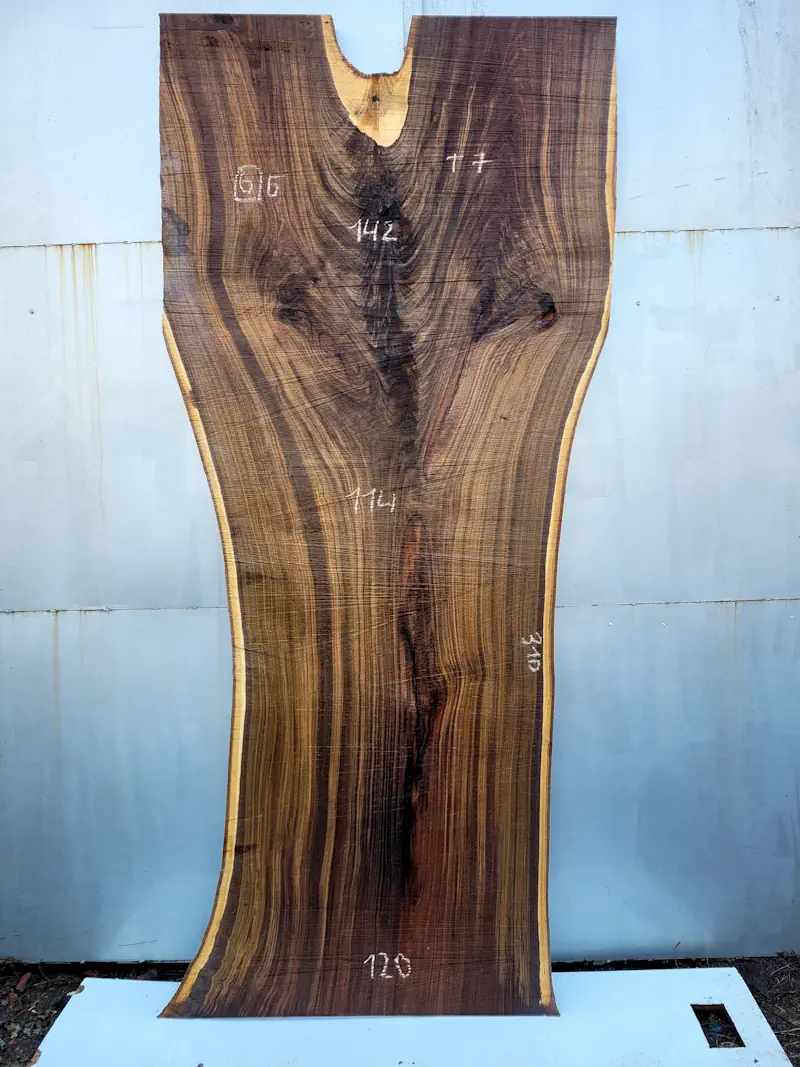
Walnut Slab #6B
An excellent material for creating a table with a distinctive texture and unique natural colour.
View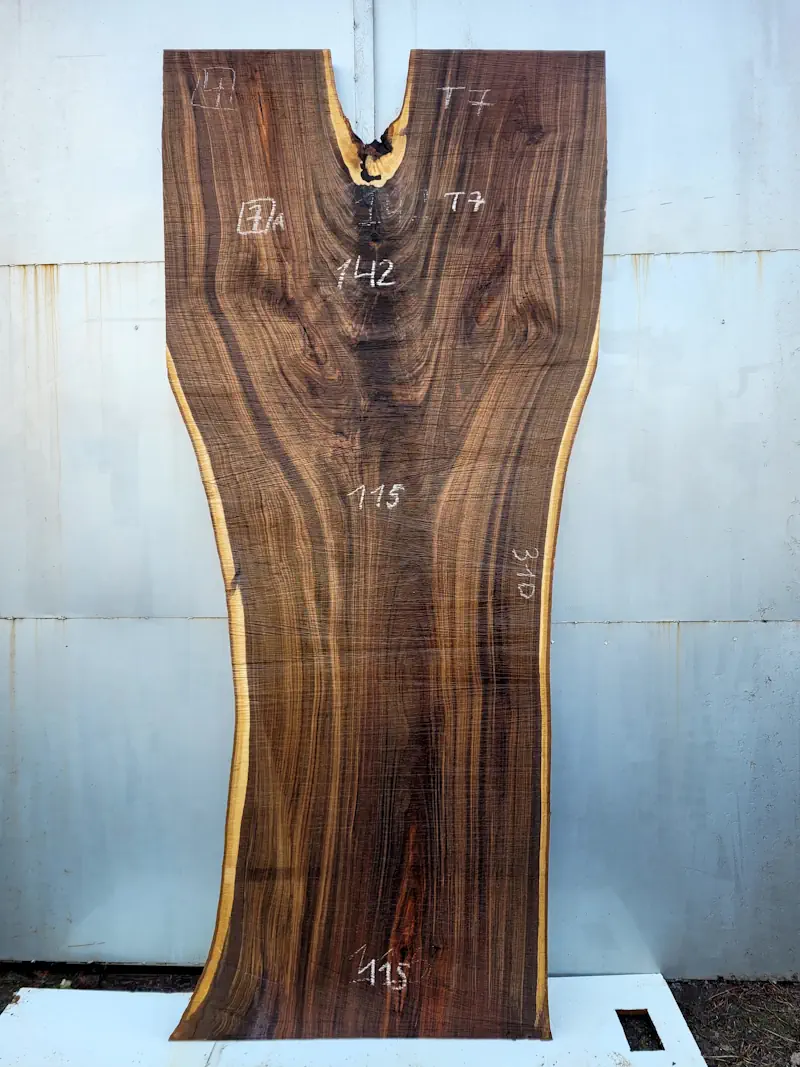
Walnut Slab #7A
Its unique grain pattern can become a focal point and a true highlight of your interior.
View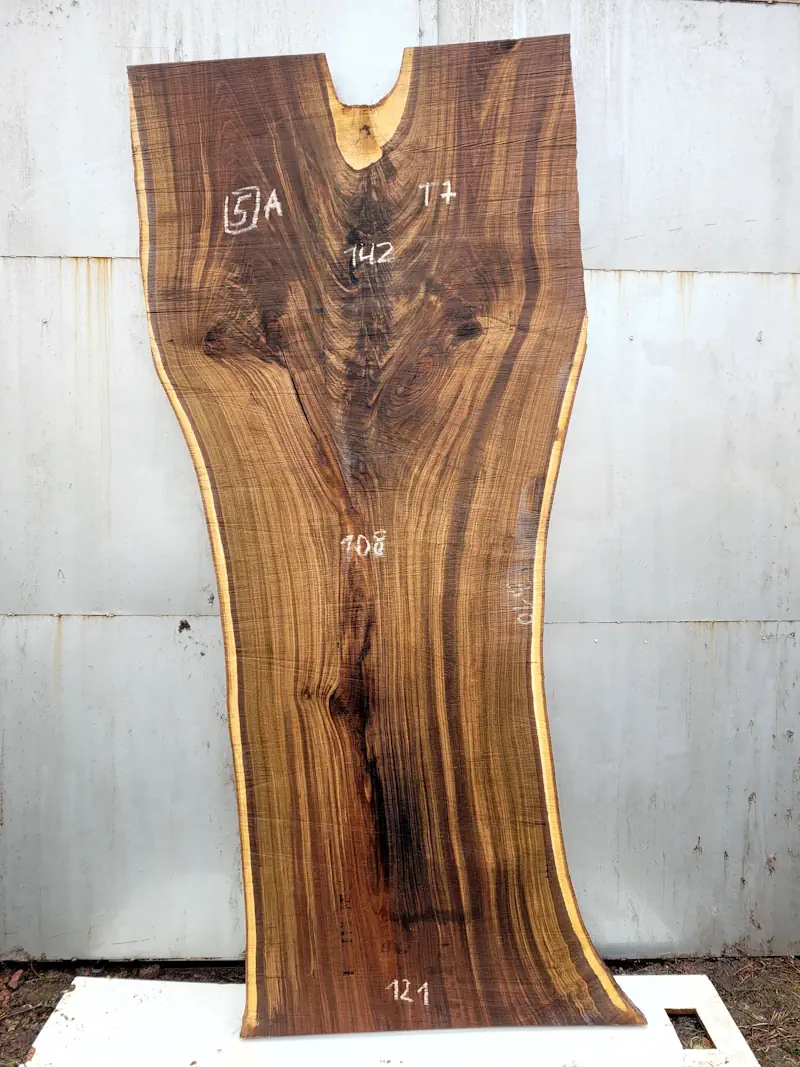
Walnut Slab #5A
Suitable for creating either a dining table or a coffee table, adding natural elegance to the interior.
ViewDesigner tables from the manufacturer are created from high-quality materials using modern production technologies, ensuring durability and reliability. They can be made according to individual dimensions and functional requirements, providing the ideal specifications for each client.
The Custom Table Manufacturing Process
Ordering and producing a custom-made table differs from purchasing ready-made furniture. The process begins with discussing the client’s requirements and vision. Based on these discussions, a design is developed, drawings or 3D models are prepared, and a detailed quotation and production schedule are agreed upon. Once the project is approved and a deposit is paid, production begins.
Table manufacturing involves several stages: producing the tabletop, either from joined boards or a slab, creating the apron where required, and manufacturing the legs or supports. The legs may be metal or wood, standard or custom-made.
After assembly, the surface is finished by sanding, filling natural defects where necessary, and applying the final protective coating such as oil, varnish or hardwax oil. Our company, Primeslabs, states a production time of approximately 30 days. Once completed, the table is delivered and installed.
Care for American Walnut Furniture
Furniture made from natural wood, including American walnut, requires careful and regular maintenance to preserve its appearance and durability.
General Recommendations
Wood is highly sensitive to various environmental factors. Remember that it is a natural material that changes and ages over time; the formation of small cracks can be a normal part of the natural ageing process.
- Liquids: any spilled liquid should be wiped up immediately using a soft damp cloth, following the direction of the grain. This is particularly important around sinks. Avoid excessive rubbing. For sticky substances, mild liquid soap diluted in water and a clean sponge may be used. Vinegar can potentially weaken adhesives in joints and should therefore be avoided.
- Temperature: place wooden furniture at least one metre away from heating appliances and other heat sources. Avoid major temperature fluctuations, as they may cause cracking. Hot objects such as cups and plates can leave marks, so coasters or tablecloths should always be used. Varnished and oil-wax finishes may also be sensitive to high temperatures.
- Light: avoid prolonged exposure to direct sunlight, as it can change the colour of the wood, cause fading and contribute to cracking of the finish. Although American walnut tends to fade slowly, an oil finish containing UV inhibitors is recommended for exterior applications.
- Mechanical damage: American walnut is relatively hard, but the surface may still be susceptible to scratches. Use protective pads and coasters. Avoid abrasive or silicone-based polishing products. Do not use a finished wooden surface as a cutting board.
- Chemicals: prevent paint and chemical substances from coming into contact with the wood. Avoid harsh cleaning agents containing ammonia or bleach, as they can damage the finish.
Surface Finishing and Protection
Different types of finishes can be used to protect the wood while highlighting its natural beauty.
- Oils and hardwax oils: these penetrate the wood and create a moisture-resistant barrier. They enhance the natural appearance of the timber and are relatively easy to maintain and repair. Reapplication may be required periodically, depending on the product and level of use. Oil protects the timber while allowing it to breathe and helps reduce excessive drying and cracking. Hardwax oils provide an additional protective layer and may also add a subtle sheen.
- Varnishes: these form a protective film on the surface that seals the timber, creating a durable, water-resistant coating with good resistance to heat and scratches. They are available in different sheen levels including matt, satin and gloss. Varnished American walnut can develop a rich, deep appearance. Acrylic, urethane and resin-based varnishes can provide excellent protection against water, stains and wear, and many are food-safe once fully cured.
- Wood stain: stain is used for decorative colouring. It penetrates into the wood without forming a thick surface film, producing an even colour while emphasising the natural beauty of the grain. It is available in a variety of tones, including shades marketed as “American Walnut”. Stain alone does not provide sufficient resistance to stains or scratches, so it should be protected with varnish or oil.
For oiled timber, use maintenance oils suitable for the particular product. Untreated wooden worktops may require frequent oiling, while surfaces protected with a clear finish may only need refinishing after several years. Some proprietary finishes may require little or no re-coating under normal use.
Repairing Minor Damage
Small scratches, chips and surface defects inevitably appear on wooden furniture over time. There are both professional and traditional methods of reducing their visibility.
- Professional methods: hard or soft repair wax can be used on a variety of surfaces to fill small defects. Furniture touch-up products are also effective for correcting damaged areas. A suitable furniture marker or wood pencil may be used for minor scratches. Wood stain can also help colour the affected area and make damage less visible.
- Traditional methods: strong black tea may help disguise minor wear on dark wooden surfaces. Walnuts or pecans can sometimes be rubbed over small scratches so that their natural oils darken the damaged area. Such household methods should always be tested in an inconspicuous area first.
- Filling deeper cracks: deeper chips and cracks can be repaired with wood filler. After filling, sanding and colour matching, the surface can be restored to a more even appearance.
When choosing a repair method, always consider the type of finish, whether varnished, polished or oiled, the depth of the damage and the desired final appearance.
Conclusion
American walnut (Juglans nigra) is more than simply a timber species — it is associated with luxury, durability and refined taste. Its distinctive colour palette, ranging from light brown to deep chocolate, together with its expressive grain and natural lustre, makes every piece unique. Its strength, density and good resistance to everyday environmental factors contribute to the durability and long service life of furniture made from this premium hardwood.
By choosing an American walnut table, you are purchasing not only a functional piece of furniture, but also a distinctive design object created from a premium natural material. Whether it is a live-edge slab table or a tabletop assembled from carefully selected boards, American walnut can add elegance and a sense of exclusivity to almost any space, from a classic living room to a contemporary office.
Although American walnut requires appropriate care, the correct finish and simple maintenance practices can preserve its beauty for decades. Investing in American walnut furniture is an investment in quality and timeless style. If you are looking for a table that can become the centrepiece of your home while combining natural beauty, strength and unique design, American walnut is one of the finest choices available.