
In contemporary interiors, where uniqueness, sustainability and durability are highly valued, a solid wood table occupies a special place. It is more than simply a piece of furniture: it is an investment capable of lasting for decades while bringing natural warmth and character into a space.
However, choosing the right wood species is a key stage because it determines not only the appearance of the finished product but also its practical characteristics. In this article, we examine several important properties of hardwoods and focus in particular on the distinctive qualities of sycamore, or plane tree, which has become increasingly popular among admirers of premium furniture and designer interiors.
Photos of a Finished Sycamore Table
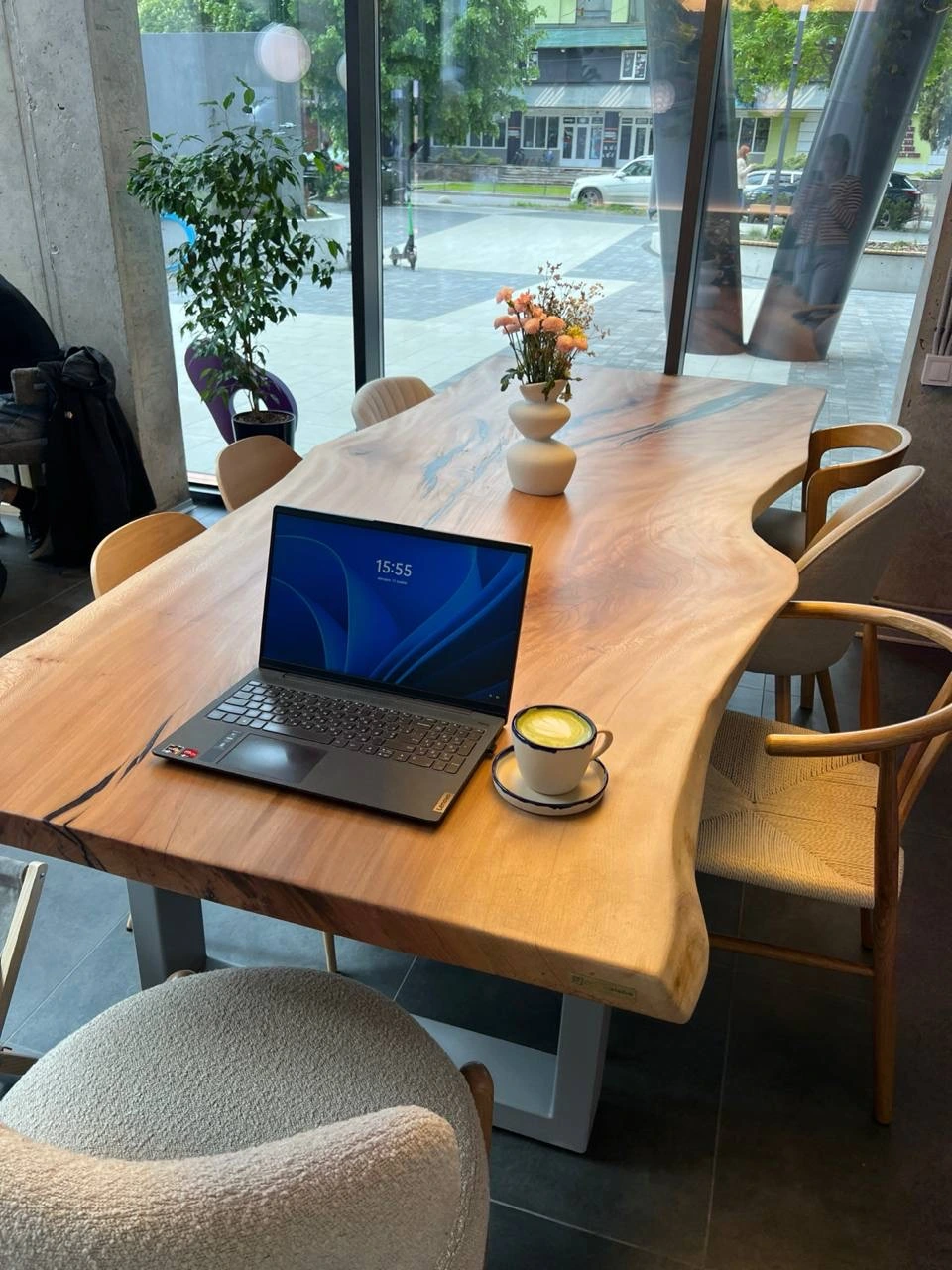


Advantages of Solid Wood Tables: The Basics of Choosing Timber
Wood is a natural material that combines strength, durability and recyclability. Its ability to look attractive in almost any type of interior makes solid wood an excellent choice for dining tables, kitchen tables, coffee tables, countertops and many other types of furniture.
The appeal of natural wood comes from its beauty, individual grain pattern and the warmth it brings to a room. When selecting wood for furniture, it is important to consider mechanical properties such as hardness, strength and dimensional stability, as well as colour, grain and texture. These characteristics make it possible to create bespoke furniture tailored to demanding functional and aesthetic requirements.
Key Factors That Determine the Quality of Wood for Tables
- Janka hardness: this measurement indicates the wood’s resistance to denting and wear. A higher Janka rating generally means greater resistance to everyday use.
- Durability and dimensional stability: an important factor is the ability of the timber to maintain its shape and dimensions without excessive warping, twisting or cracking, particularly when temperature and humidity change.
- Aesthetic properties: colour, texture, grain and the presence of distinctive natural patterns such as live edges, bird’s-eye figure or other decorative grain play an important role in creating a unique design.
- Workability: how easily the timber can be cut, sanded, turned, glued and finished affects both the complexity of production and the quality of the finished piece.
Sycamore: A Contemporary Choice for Premium Tables
American sycamore, also known as American plane (Platanus occidentalis), is a distinctive hardwood that is becoming increasingly popular in high-quality furniture making.
It is important to distinguish American sycamore from the tree commonly called sycamore in Europe. In European usage, “sycamore” often refers to sycamore maple (Acer pseudoplatanus), whereas American sycamore (Platanus occidentalis) belongs to a completely different genus.
American sycamore grows primarily in eastern North America, from Nebraska to northern Florida. Large trees are often found on well-drained floodplains and in open areas.
Characteristics of Sycamore Wood
Sycamore is known for its strength, moderate hardness and durability in interior applications. The timber is predominantly light or creamy in colour, sometimes with darker reddish-brown streaks in the heartwood. It has a fine, relatively uniform texture with a moderate natural lustre. The annual growth rings are generally not strongly pronounced.
Grain and appearance: although the wood often has a relatively straight grain, some trees can display highly decorative figuring such as fiddleback or bird’s-eye patterns. These forms are particularly valued in fine woodworking.
Distinctive ray flecks are especially visible on quarter-sawn surfaces, giving the timber a characteristic speckled appearance. Because of this decorative effect, quarter-sawn sycamore is sometimes compared visually with lacewood. Such figuring makes every furniture component individual and unique.
Freshly cut sycamore may display a brighter reddish tone, which gradually develops into reddish-brown shades as the wood oxidises.
Hardness: American sycamore has moderate hardness and is capable of withstanding normal everyday use. Its Janka hardness is approximately 770 lbf (3,430 N). This makes it somewhat softer than cherry or hard maple, but still sufficiently durable for many types of tables and interior furniture.
Some pieces of sycamore may contain softer areas. Where necessary, such zones can be stabilised or filled with epoxy resin during the production of designer furniture.
Workability and Drying of Sycamore
Sycamore can generally be worked successfully with both hand and machine tools. Its interlocked grain can occasionally make surface preparation more demanding, but the timber is also suitable for fine carving and detailed woodworking.
It can be sanded to a smooth, almost silky surface, which helps emphasise the elegance of the finished product. The wood also turns well on a lathe, can be glued successfully and accepts a variety of finishing systems. Sycamore also has useful bending properties.
Special attention must be paid to drying. Although the timber can dry relatively quickly with limited distortion or splitting, it is particularly susceptible to discolouration.
This may result not only from fungal activity but also from chemical or enzymatic processes that can create marks beneath the drying stickers, a phenomenon often known as sticker stain.
To preserve a clean, pale colour, some woodworking recommendations favour harvesting during the cooler months, followed by prompt processing and controlled drying. When the aim is to preserve the light colour, kiln temperatures should remain carefully controlled.
With proper drying, sycamore can become a dimensionally stable material suitable for precision furniture production.
Durability and Applications of Sycamore
In terms of natural resistance to decay, American sycamore is generally classified as non-durable or perishable and may also be susceptible to insect attack. For this reason, untreated sycamore is not normally considered an ideal choice for prolonged exterior exposure.
Both sapwood and heartwood, however, can accept preservative treatments, which can extend the range of potential applications.
Historically, sycamore was valued by craftsmen for both its functional and visual qualities. Its toughness made it suitable for workbenches and tool handles, while decorative pieces were used in furniture and interior joinery.
Today, sycamore is used for:
- dining tables, coffee tables and desks;
- veneer and plywood;
- interior trim and mouldings;
- flooring;
- kitchen utensils because the wood is easy to clean and does not strongly affect the taste of food;
- turned objects, crafts and musical instruments, particularly when decorative figured grain is present.
Contemporary designers value sycamore for its versatility and natural appearance. Because sycamore trees can grow relatively quickly, the species can also be an attractive option for responsibly managed furniture production.
Sycamore in Live-Edge Design and Epoxy Resin Furniture
Live-edge sycamore tables occupy a special place in the Primeslabs collection. This design approach preserves the natural contours of the trunk, showing the original geometry of the tree and the unique grain of each slab.
Such tables can become genuine statement pieces and a central element of an interior. The combination of natural wood, irregular edges and carefully selected finishing makes every finished table individual.
Unique Pieces from the Primeslabs Collection
Primeslabs offers distinctive examples that demonstrate the versatility of sycamore and its potential for designer furniture:
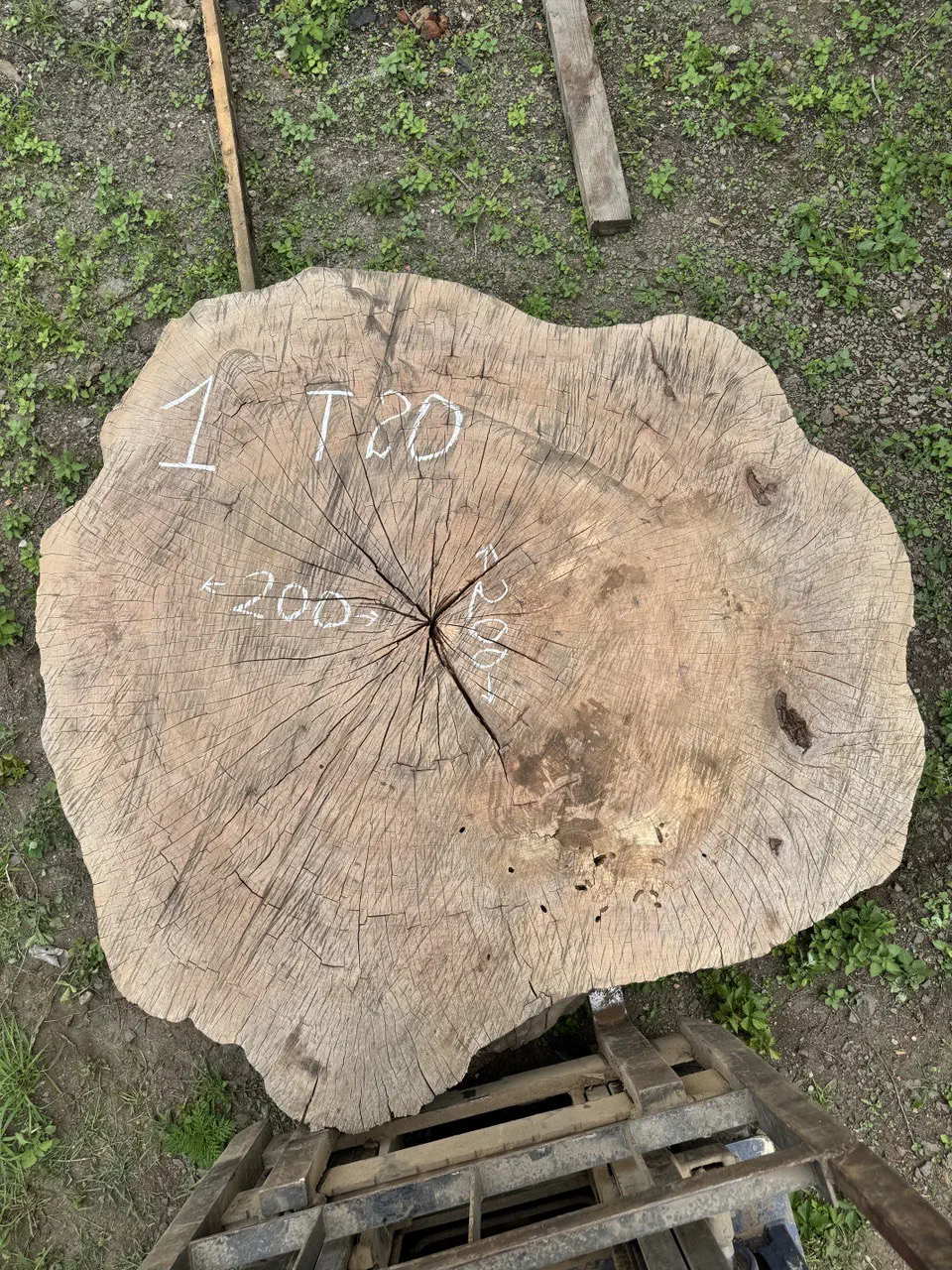
Round Sycamore Slab
Round solid-wood tables create a sense of balance and hospitality, providing a welcoming setting for conversation and dining.
View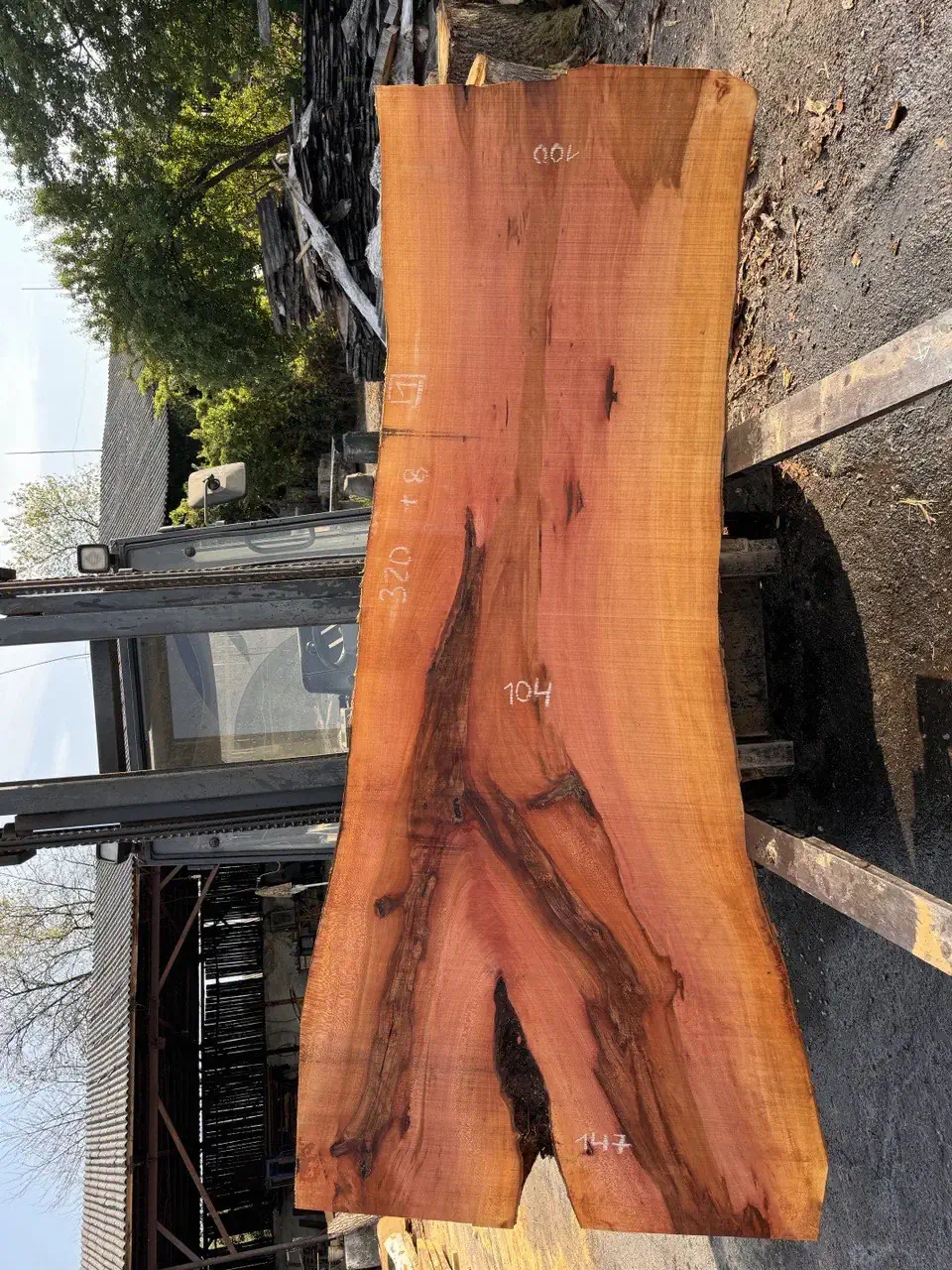
Live-Edge Sycamore Slab
A rectangular slab displaying distinctive natural grain and interlocked texture. The live edge preserves the authentic outline of the tree.
View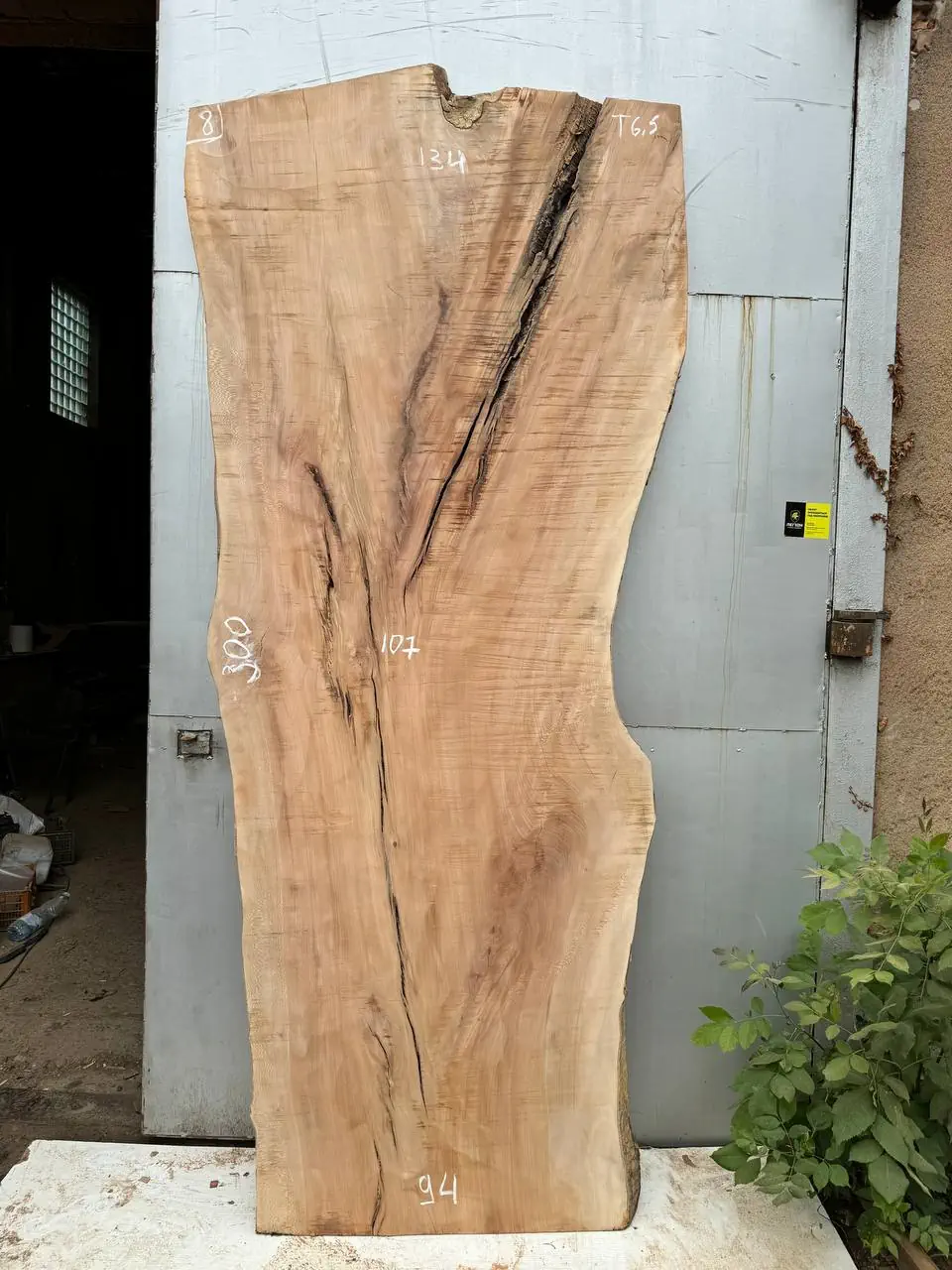
Large Sycamore Slab
A large-format slab suitable for creating impressive and elegant furniture, including statement tables with epoxy resin.
ViewCombining natural timber with epoxy resin makes it possible to create transparent, coloured or highly decorative sections while preserving the natural geometry of the slab. Careful resin casting helps minimise bubbles and create the characteristic appearance of river tables with deep blue, transparent or custom-coloured resin.
This approach is particularly attractive to designers and architects looking for unusual but functional centrepieces for residential, hospitality or commercial interiors.
Care and Maintenance of Sycamore Tables
Proper care is essential for preserving the natural beauty and long service life of sycamore furniture. Although sycamore is a strong material, like all natural wood it reacts to environmental factors such as humidity, temperature, direct sunlight and mechanical damage.
Care Recommendations
- Climate sensitivity: sycamore reacts to changes in humidity and temperature, which can result in natural movement or warping of the timber. Maintaining a relatively stable indoor climate with appropriate heating, air conditioning or humidification helps reduce these changes.
- Daily cleaning: regularly wipe the table with a soft cloth to remove dust. For more thorough cleaning, use a slightly damp cloth and a mild cleaning product. After cleaning, dry the surface immediately with a soft dry cloth to prevent water marks. Avoid aggressive chemicals that may damage the finish or affect the natural surface of the timber.
- Surface protection: protect the tabletop from hot cups, plates and cookware by using coasters, placemats or tablecloths. This reduces direct heat transfer to the finished wooden surface. The table should also be protected from paints, aggressive chemical products and similar substances. Water, coffee, tea and other liquids should be wiped away promptly.
Finishing and Restoration
Correct sanding is critical to achieving a high-quality finish. No coating can completely hide poor surface preparation; in many cases, a glossy finish will actually emphasise imperfections.
The surface can be progressively sanded to a fine grit depending on the selected finishing system. Techniques such as raising and resanding the grain, sometimes referred to as dewhiskering, can help remove raised fibres and produce a smoother surface.
Sycamore accepts a wide range of finishes and can be stained successfully. Its fine pores make it possible to achieve a smooth, high-gloss or almost glass-like surface when suitable finishing systems are applied correctly.
Popular finishing options include:
- Oil and oil-varnish finishes: these penetrate the timber, enhance the natural grain and create a softer, more natural sheen.
- Wax over shellac: shellac creates a protective base layer, while wax gives the surface a smooth tactile feel and enhances the sheen.
- Epoxy resin: live edges, natural voids and cracks can be filled with epoxy resin, producing a distinctive and highly durable decorative effect.
Minor scratches can be treated with suitable furniture touch-up markers or wax repair pencils. Water marks may sometimes be treated using a mild, non-abrasive product suitable for finished timber.
Loose joints may require appropriate woodworking adhesive and clamping. If an oil or wax finish becomes dull over time, it can usually be refreshed with a compatible maintenance product. For serious structural damage or complex refinishing, professional restoration is recommended.
Conclusion: An Investment in Natural Beauty and Quality
A sycamore table combines refined appearance, natural character and the versatility of solid timber. Its distinctive grain, practical strength and ability to accept a wide variety of finishes make it an attractive option for clients looking for more than ordinary furniture.
The material is especially suitable for bespoke pieces in which the individual shape, grain and live edge of the tree become part of the design. When processed and dried correctly, sycamore can provide a strong foundation for distinctive furniture that integrates naturally into contemporary interiors.
By choosing solid wood furniture from Primeslabs, you receive not only a high-quality natural material but also the opportunity to create an individual design. Whether it is an elegant round sycamore table or a monumental live-edge slab complemented by transparent epoxy resin, each piece can reflect craftsmanship, attention to detail and a deep understanding of natural timber.
It is a choice for those who value distinctive design, traditional woodworking and the character of genuine solid wood in a contemporary premium interior.